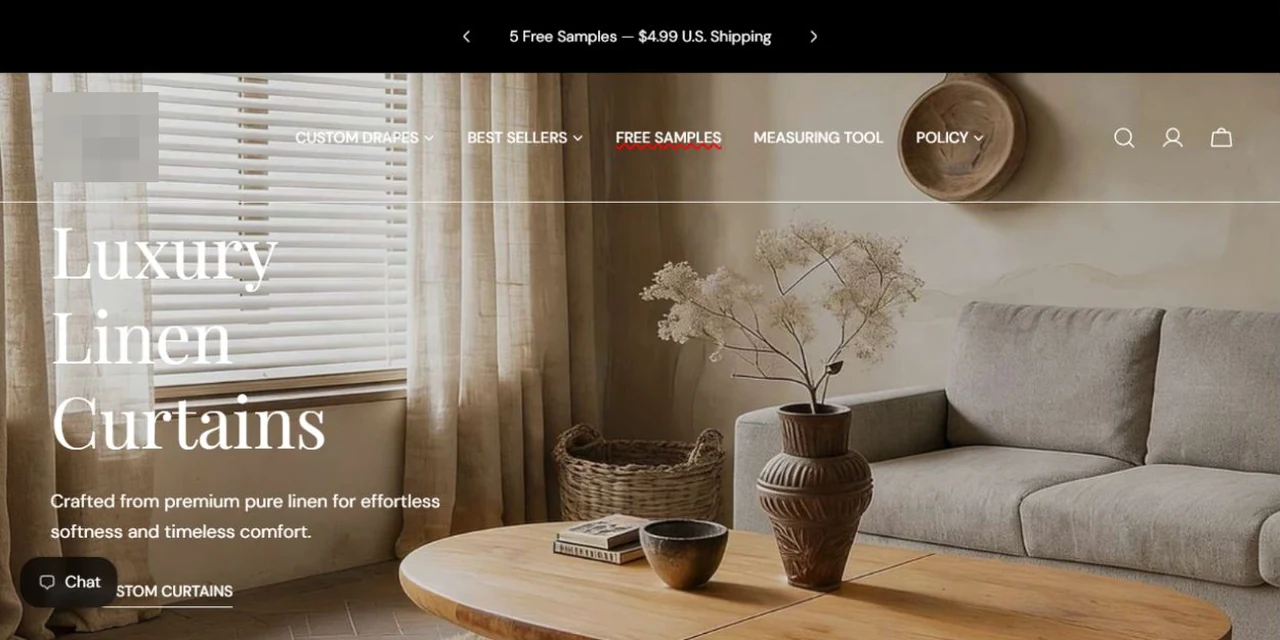
A branded storefront with guided configuration, matching-product filtering and live pricing, carrying styles and measurements into product details and orders.
This made-to-measure curtain brand serves consumers in the United States. Fabric, heading style and installation dimensions vary between homes, so shoppers need to understand the visual options, enter their measurements and choose extras such as lining and tiebacks. The final price also changes with the configuration, requiring more than a fixed-size product display.
The client wanted configuration, product discovery, price confirmation and ordering to form one online journey. After customers choose a style and enter dimensions, the configurator needs to find matching products. Their selections must then carry into the product page so they can continue without entering the same information again.
We reviewed comparable stores, defined option sequences and pricing rules, and developed the Liquid storefront and product configurator. Delivery covered guided selections, measurements, matching products, live prices, a configuration summary, and data passed through the cart and order to support production.
The challenges
Made-to-measure inputs
Curtain dimensions are entered to measure rather than selected from fixed sizes. Width, height, fabric and heading style must be included in pricing.
Preserve selections between steps
Confirmed customization details must persist between steps, on returning to the product page and in the cart.
Quoted prices must match the order
The configuration's price and specifications need to reach the order, rather than remaining only in the interface.
02Our scope of work
Website planning and development
Organize brand content, fabrics and the product catalog, using comparable stores to define browsing and configuration entry points. Develop Liquid pages and templates that connect the brand experience, product filtering and configurator.
DeliverableBranded storefront and product templates
Guided configuration and product matching
Structure headings, measurements and additional choices as successive steps, supported by style images and measurement guidance. Filter matching products from the selected style and dimensions, then prefill those values on the product page.
DeliverableConfiguration, matching and carried-forward selections
Configuration state and live pricing
Define pricing relationships between fabric, headings, dimensions and extras. Preserve selections between steps and update prices when inputs change, bringing the final specification and cost together for review before purchasing.
DeliverableLive pricing and configuration review
Cart and order information
Pass the final style, measurements, additional options and price into the cart and order line. Preserve different custom specifications as separate configurations and test that page quotes, cart entries and order parameters agree.
DeliverableComplete custom-order information
03Pages, features and journeys
Project interface
01
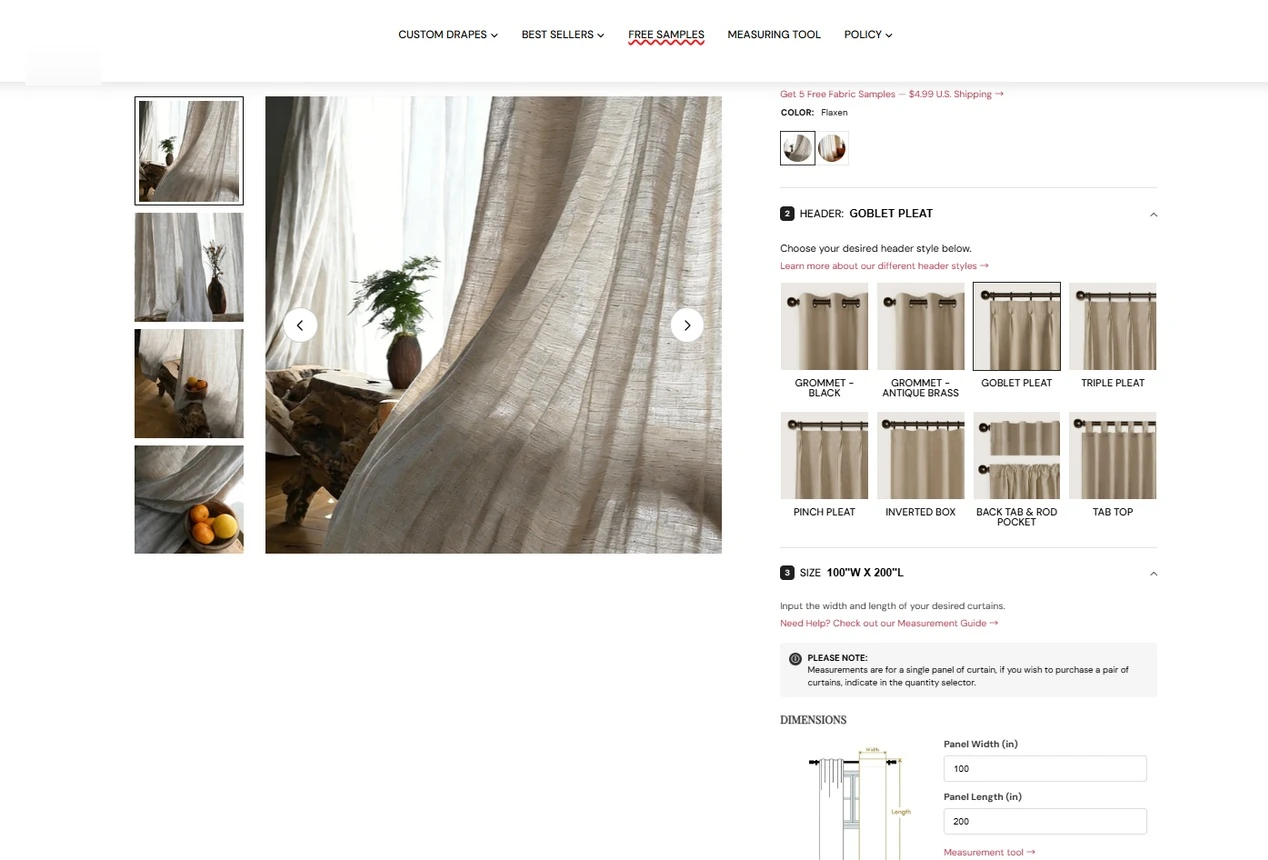
Keep customization within the product experience
Product imagery sits alongside the configurator, so shoppers can inspect the fabric while choosing a heading style, entering dimensions and completing other options. Instructions and measurement guidance remain close to the relevant controls.
Product imagery, heading styles and dimensions share one page.
Measurement guidance explains the parameters shoppers need to enter.
Project interface
02
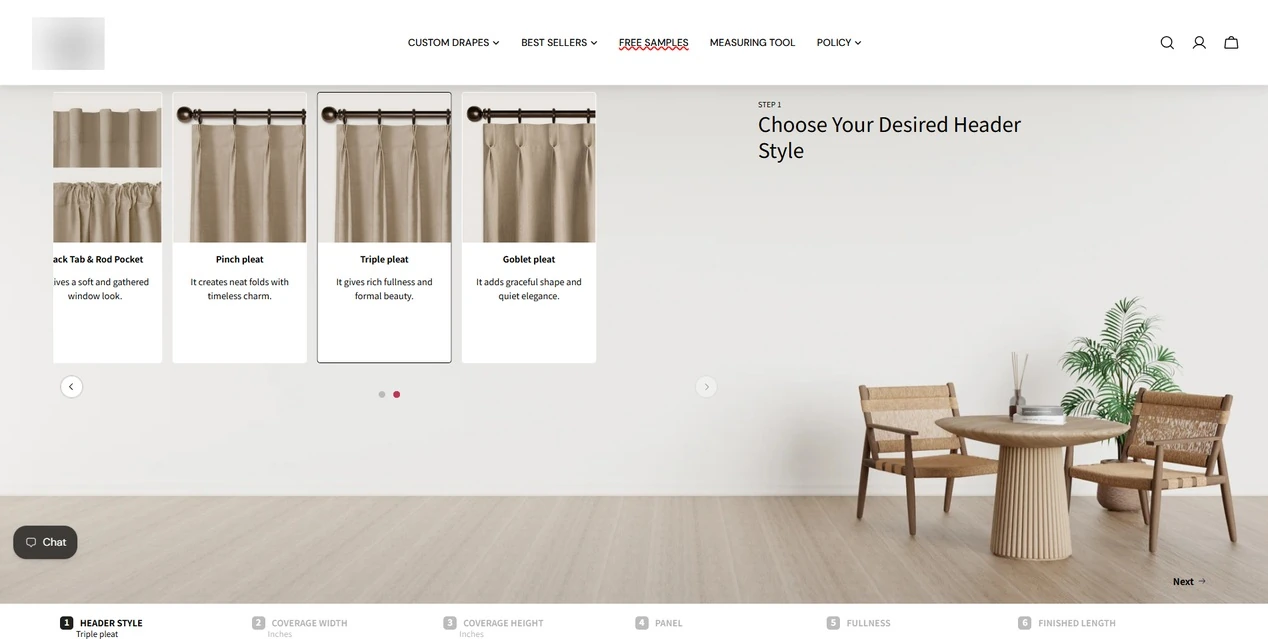
Guide heading-style choices with visual examples
Style images explain the differences between curtain headings before customers select their preferred configuration. The choice carries forward into measurements, other options and the final review.
Style images correspond to selectable options.
Sequential steps organize the individual customization decisions.
Project interface
03
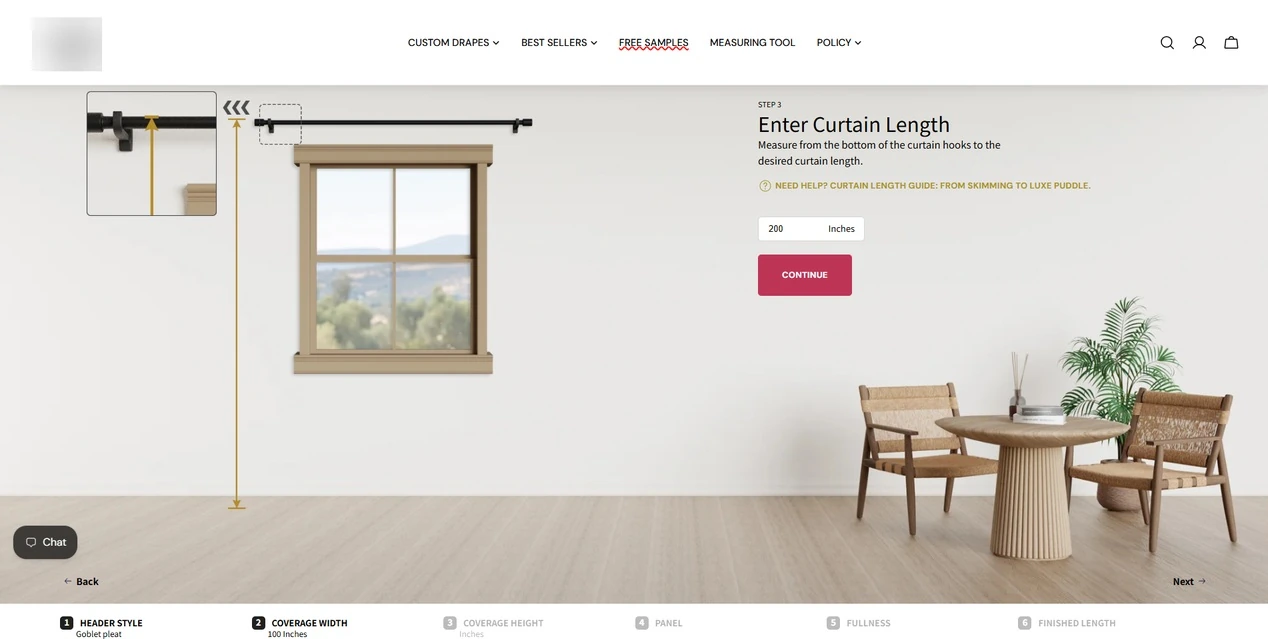
Turn measurements into configuration inputs
Measurement diagrams, dimension fields and installation guidance appear within the same step. Entered values contribute to pricing alongside the selected options and remain available for the final review.
Width and height feed into the custom quote.
Measurement guidance appears alongside the relevant inputs.
Project interface
04
Review the configuration before purchasing
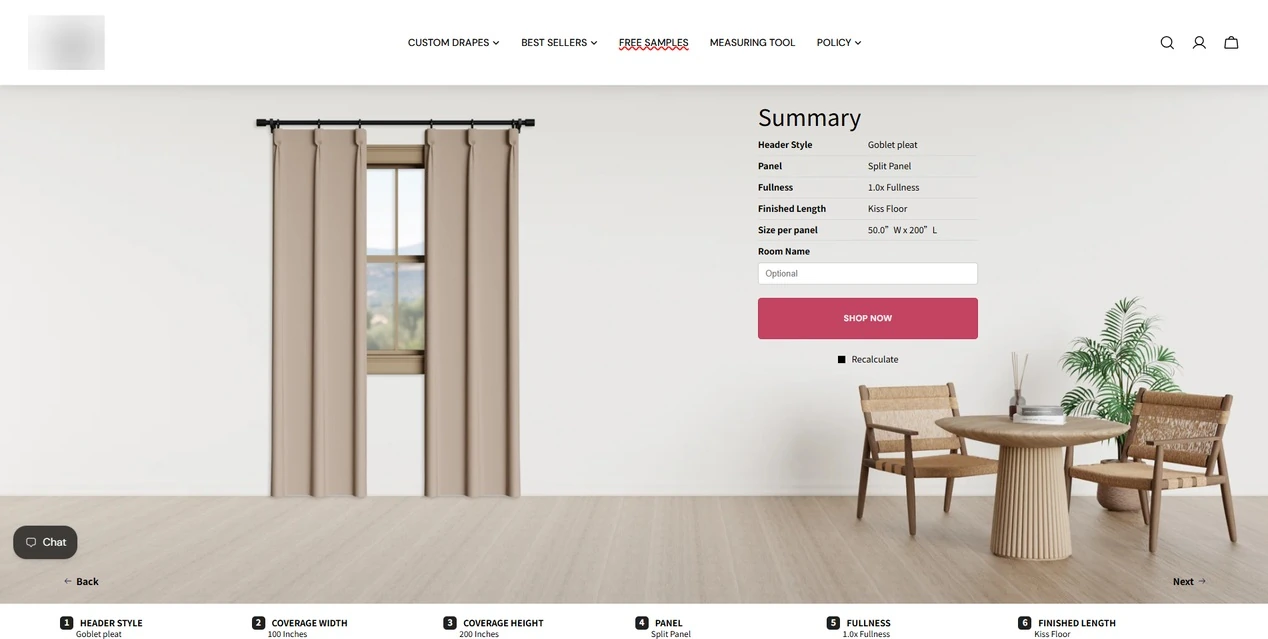
The summary brings selected options and pricing together so customers can check their requirements before continuing. The confirmed configuration then connects to the product page, cart and order details.
Review styles, measurements and additional options together.
Carry the configuration through the purchase journey into the order.
Project interface
05
Carry each configuration through to the cart
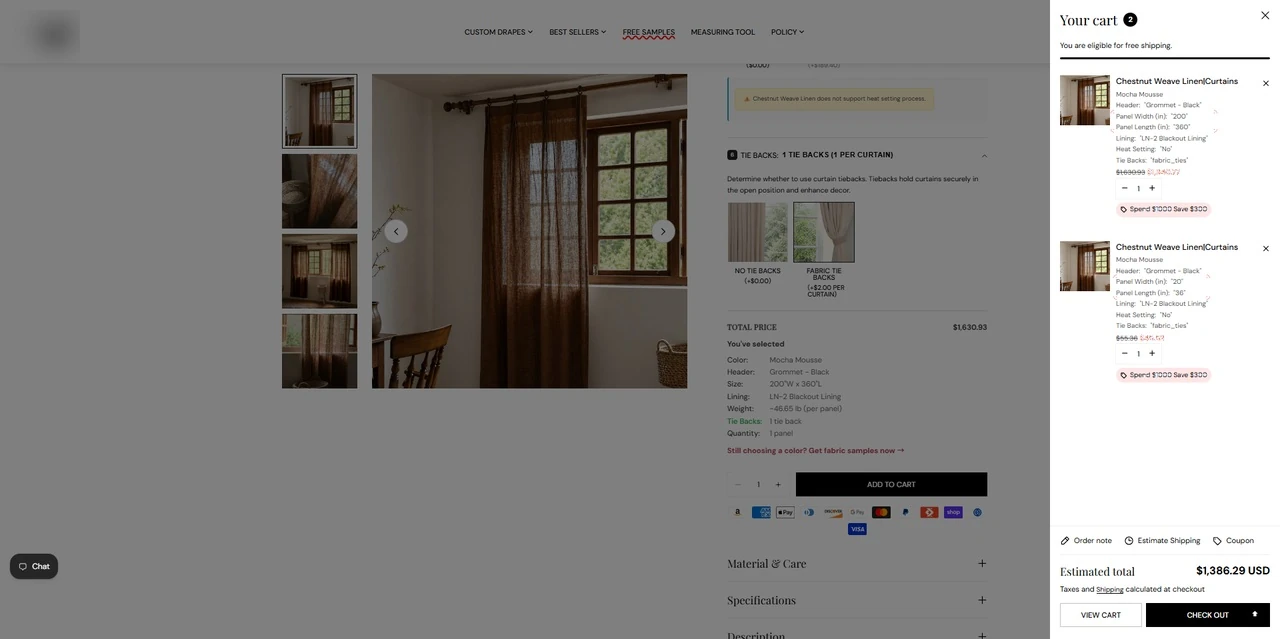
The cart shows two curtain configurations as separate line items, with their selected color, heading, dimensions, lining and tiebacks alongside individual prices. Shoppers can review the specification of each made-to-measure item before checkout.
Different specifications remain separate cart items.
Each configuration carries its own option summary and price.
From fabric selection to a measured order
A made-to-measure curtain illustrates how configuration connects with purchasing.
Choose styles and dimensions
Use visual examples and measurement guidance to configure the initial requirements.
Find matching products
View products matching the selected style and measurements.
Confirm the configuration
Continue with prefilled values, complete additional options and review the price.
Order with specifications
Carry the complete configuration into the cart and order.
04Technical approach and workflows
Key decisions
Break complex choices into steps
Break configuration into connected steps, with earlier selections informing later options and calculations.
One configuration throughout the transaction
Use one set of parameters for configuration, pricing and order records to prevent information gaps.
Functional layers and information flow
Liquid pages and templates support the brand and product experience, while the configurator maintains one set of styles, dimensions and extras. That configuration drives product matching and pricing and carries through product details, the cart and the order.
Website and product templates
Liquid pages present brand content, categories and product details, with configuration entry points connected to product browsing.
Configuration, matching and pricing
Selected styles and measurements identify matching products and prefill the product page. Changes update the current price and summary.
Cart and orders
Styles, dimensions, extras and prices remain attached to each configuration, keeping separate custom specifications distinct in the order.
01
Styles and measurements
Select the style and enter actual dimensions
02
Product matching and pricing
Carry selections forward and review the quote
03
Ordering and production
Pass the confirmed requirements into the order
A simplified workflow diagram showing responsibilities and information flow.
05Delivery and validation
Requirements and configuration rules
Review purchase requirements and reference sites, then confirm styles, dimensions, extras and pricing relationships.
Stage output Configuration flow and pricing rules
Store and configurator development
Develop Liquid pages and integrate step-based options, measurement inputs and the summary into the product journey.
Stage output Website and configurator build
Pricing and order integration testing
Change configurations to test live pricing, preserved values, cart data and order-line details.
Stage output Pricing-to-order flow
Cross-device testing and launch
Test devices and edge-case combinations, resolve display, interaction and pricing issues, then complete acceptance testing.
Stage output Verified release
Validation checklist
Steps and persistent selections
Check that selected values persist when moving between steps or returning to the product page.
Dynamic pricing
Change dimensions and extras, then compare configurator pricing with the cart.
Order parameters
Verify that fabric, heading, width, height and extras reach the order in full.
Devices and option combinations
Check controls across devices and test agreed option combinations and edge cases.
06Deliverables and project value
Product discovery starts with actual requirements
Customers use styles and measurements to find matching products, then continue directly to the relevant product details.
Selections and prices remain connected
Previously entered values carry forward, prices respond to the configuration, and shoppers can review their choices before purchasing.
Specifications support production
Custom requirements remain attached to the relevant product and price in the cart and order, providing information for fulfillment checks.